

The Premier League Has Lost Its Aura
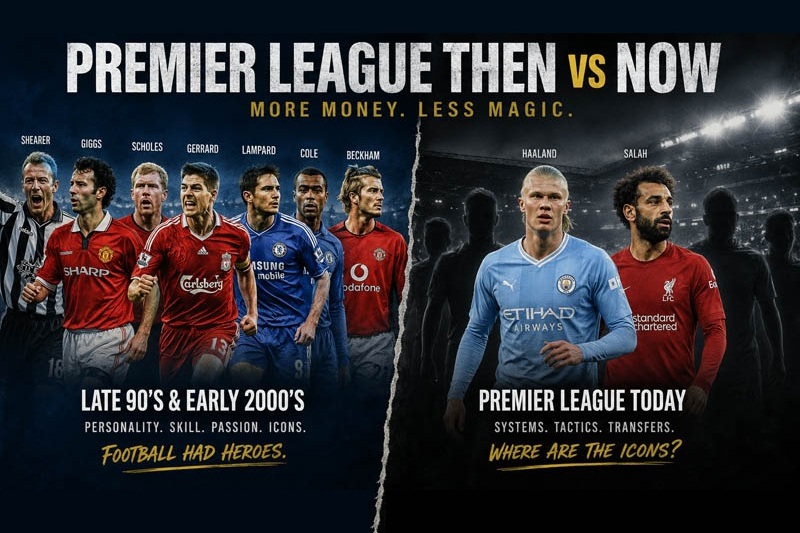
There was a time when the Premier League felt larger than life. Every weekend delivered personalities, rivalries, swagger, and genuine world-class footballers every where you looked. The late 90s and early 2000s were not just entertaining, they were overflowing with talent. Today, despite outragously big television deals, shinier stadiums, and endless social media hype, the league feels strangely diluted.
Yes, the modern Premier League is faster. Yes, the athletes are fitter. But talent? Genuine footballing greatness? That is where today’s game fails to stack up when compared to the era I grew up watching.
Right now, if you ask most supporters to name truly elite Premier League players, the list would be disappointingly short. Erling Haaland is an incredible goalscorer. Mohamed Salah has been phenomenal for years, but we're watching the final chapter of his Premier League story. Where's the next generation of top stars coming from?
Compare that to the late 90s and early 2000s.
You had Alan Shearer bullying defenders every single week whilst setting an almost unbeatable total goals target. Ryan Giggs gliding past full-backs like the ball was attached to his boots. Paul Scholes controlling matches with a level of intelligence today’s midfielders rarely reach. Steven Gerrard could drag a struggling team to victory through sheer force and determination. Frank Lampard was scoring goals from midfield at a rate that still looks ridiculous today. Ashley Cole set the standard for modern left-backs before people even appreciated the wing back position properly. And then there was David Beckham — a player who combined celebrity status with elite delivery and work ethic. He was never truly appreciated in my opinion.
That was just scratching the surface.
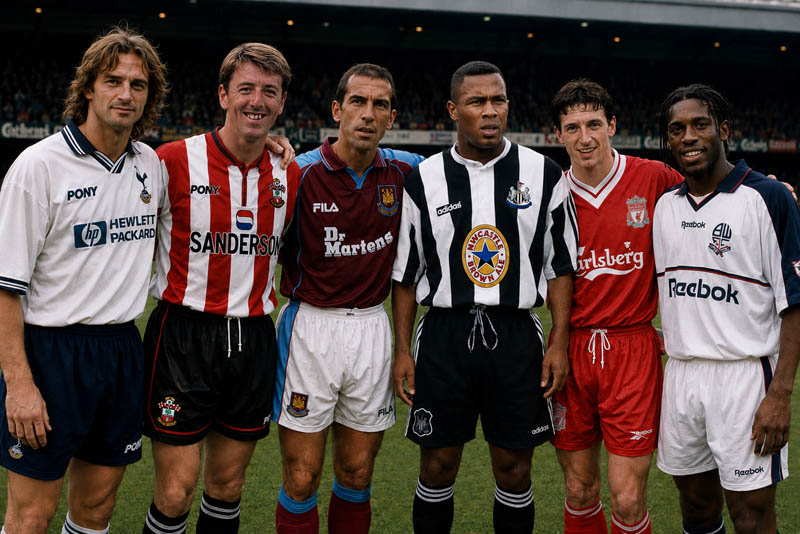
The depth of quality back then was absurd. Clubs outside the top two or three still had stars with personality and brilliance. Matt Le Tissier at Southampton. Jay-Jay Okocha at Bolton. Paolo Di Canio at West Ham. Robbie Fowler at Liverpool. David Ginola at Tottenham. Every club had at least one player fans genuinely feared or adored. Les Ferdinand is a prime example of how good that era was. Big Les scored 111 Premier League goals without taking a single penalty. Name a player in todays era pushing numbers like that whilst not taking pot kicks. Also worth noting, Ginola, despite his Tottenham side that finished 11th and being up against a treble winning Manchester United side packed with star talent, picked up the Players Player of the Season and Football Writers Association Footballer of the Year double. Incredible.
Today, too many teams feel tactically identical. Everyone presses. Everyone builds from the back. Some have far more ability to do so than others. Everyone plays safe percentages. Players are coached into systems so rigidly that individuality disappears. Modern football has become obsessed with efficiency, but in the process it's lost some magic.
Back in the older Premier League era, players looked different from one another. Beckham crossed. Giggs dribbled. Scholes dictated tempo. Gerrard surged forward. Bergkamp created moments nobody else could even imagine. There was variety in styles and personalities. You could identify players instantly from the way they moved.
Now? Too many midfielders look interchangeable. Too many wingers are simply pace merchants instructed to cut inside and recycle possession. Footballers today are technically excellent, but feel anything but iconic.
Part of the problem is that modern football rewards systems over stars. Managers have become bigger than players. The structure matters more than flair. A player who takes risks can easily find himself dropped for losing possession. Just look at Jack Greilish. At Villa he was adored and England fans around the country were crying out for him to be in the national team. At City, the same style of play saw him cast out and eventually palmed off to Everton. In the late 90s, risk-taking was celebrated. Fans wanted entertainers.
Another issue is that social media and modern coverage inflate reputations far too quickly. A young player has six good months and suddenly gets labelled “world class”. In the older era, players had to earn that status over years of consist performances. Nobody called a footballer legendary after one decent season.
Look at the midfield debate alone. Today’s generation often gets compared to the likes of Gerrard, Lampard, and Scholes far too casually. Those three dominated the league for years while carrying massive expectations every week. They brought goals, leadership, memorable moments, and consistency across entire careers. Modern midfielders are talented, but very few have that complete package.
Even defensively, the older era had giants. John Terry, Rio Ferdinand, Tony Adams, and Sol Campbell brought leadership and physical dominance. Defenders today are often judged more on passing angles than actual defending. Virgil Van Dijk is arguably the only defender from the last 10-15 Premier League seasons that could be put into the same bracket as them.
That's not to say modern football has no quality. It clearly does. Haaland is a machine. Salah has been one of the Premier League’s greatest forwards. Harry Kane, similarly. Kevin De Bruyne at his best was sensational. But the concentration of truly memorable players feels much smaller than it once did. Bruno Fernandes won the 2026 FWA's Footballer of the Year award this year. He's been good. But where would he rank if he played in the era we're talking about?
There's also something missing culturally. Football in the late 90's and early 2000's felt raw and authentic. Rivalries had edge. Stadiums had personality. Players felt accessible but intimidating at the same time. Today, media training has polished many personalities into blandness. Every interview sounds identical. Every social media post feels approved by a marketing department.
Fans remember eras because of emotion as much as trophies. Older Premier League football created unforgettable moments constantly. Beckham from the halfway line. Gerrard in Istanbul. Cantona’s celebration after that chip against Sunderland. Vieira vs Keane. Nikos Dabizas still trying to work out how the hell Dennis Bergkamp did what he did to him that night at St James' Park. Those moments became part of footballing history. Short of the AGGUUEEERROOOOO goal back in 2012 we're lacking many comparable moments aren't we?
The modern Premier League is undoubtedly richer, but richer doesn't always mean better.
In many ways, today’s league resembles a perfectly engineered machine: efficient, controlled, and globally marketed. The Premier League of the late 90s and early 2000s, by contrast, felt alive. It had flaws, chaos, aggression, unpredictability, and individuality.
That's why so many fans still romanticise that period. It's not just nostalgia. It's not just my rose-tinted glasses. The talent pool genuinely felt deeper, more expressive, and more memorable.
The modern Premier League may dominate financially, but when it comes to iconic footballers, unforgettable personalities, and genuine aura, the older generation still clears it with ease.